
For overseas importers who need to ship from China, air freight is usually the choice when deadlines are tight. However, when actually arranging transportation, importers with large quantities of goods will encounter a problem: should they book regular air freight or consider chartering?
If the quantity of goods is small and regular flights have sufficient space, there is usually no need to spend more money on chartering. Conversely, if the quantity of goods is large, the delivery time is particularly tight, or regular flights cannot accommodate all the goods, and you require shipment in one batch, then you must consider chartering services. Choosing a mode of transportation cannot be based solely on which one flies faster or which one is cheaper; it must also consider the specific details of the goods, available space, overall costs, and whether the goods can ultimately arrive at their destination on time.
Regular Air Freight: Suitable for most general cargo
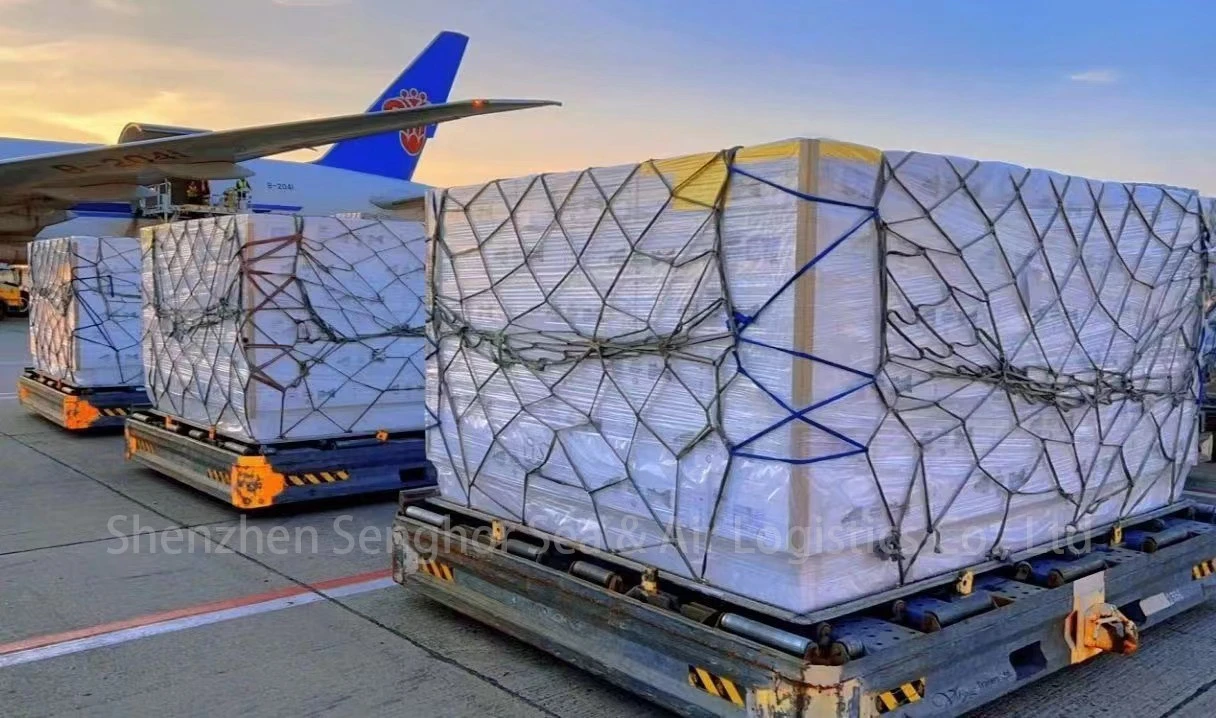
Regular air freight involves shipping goods through scheduled flights operated by airlines. Based on the weight, volume, and destination of your goods, we book space with the airline, then arrange inland transportation from the supplier's warehouse to the airport warehouse, airport warehouse operations, export customs declaration, and airport delivery. Its advantages include a wider selection of flights and a more mature and stable transportation arrangement. For general commercial goods, replenishment orders, and goods with specific time requirements, regular air freight is usually a suitable choice.
However, regular air freight also has a practical problem: available flights do not necessarily mean sufficient space. Especially during peak seasons or when large projects are concentrated in one shipment, airline space may be tight. Even if the goods are ready in the airport warehouse, they may need to be shipped in batches or the departure date may need to be adjusted.
Therefore, when inquiring about prices, in addition to asking about the price per kilogram, you should also confirm: Is there currently available space? What is the expected departure date? Are there other options if the flight is canceled or space changes? These questions are often more important than simply comparing freight rates.
Air Charter: Suitable for Large Cargo Volumes and Special Shipping Needs
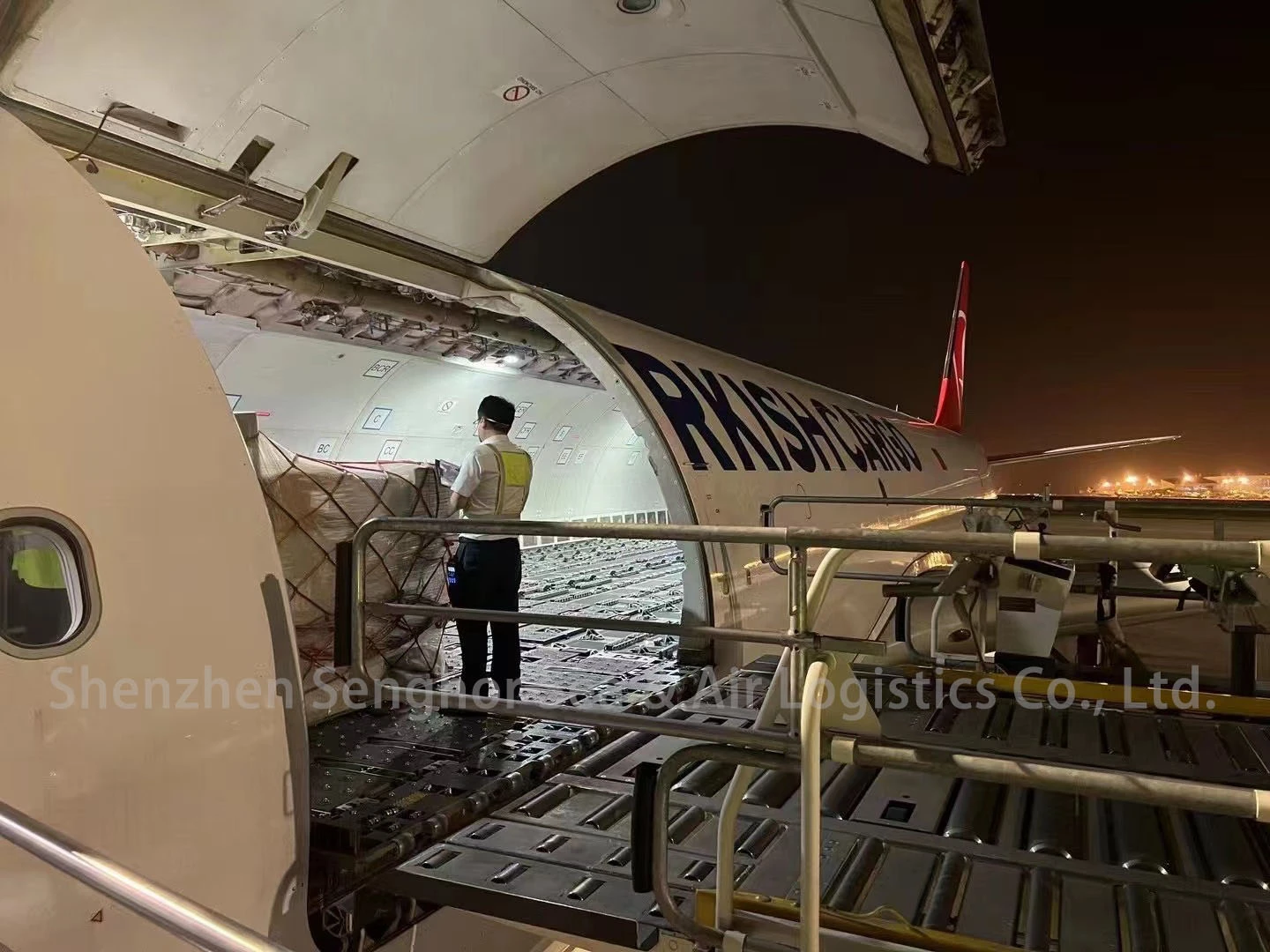
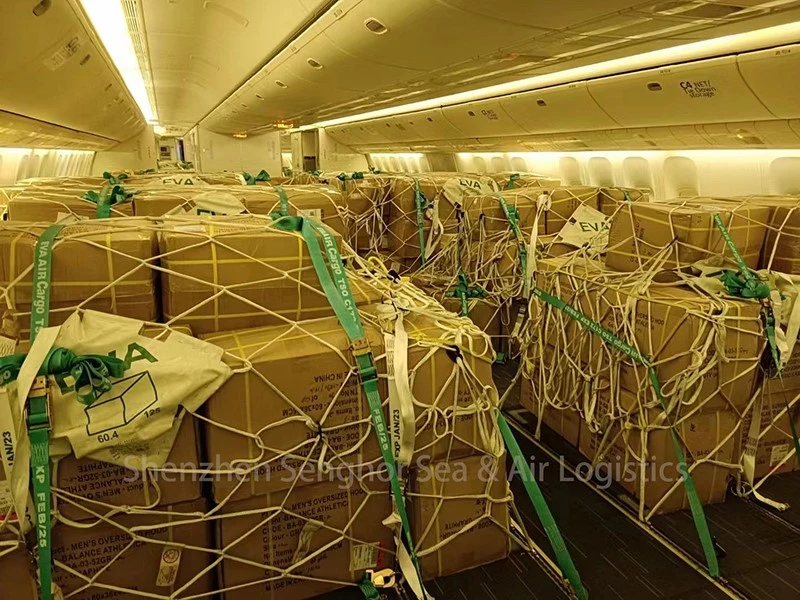
Air charter, simply put, involves arranging dedicated aircraft capacity based on a customer's cargo and shipping needs, rather than simply booking a portion of the cargo space on a regular flight. Its biggest advantage is greater flexibility (simply put, a dedicated aircraft for your cargo). Charter options are suitable for projects with large cargo volumes, tight delivery times, or cargo with unique dimensions that are difficult to accommodate on regular flights. Common examples include scheduled charter flights for e-commerce platforms or temporary, one-off charter flights for urgent projects.
Another scenario is that an airline develops a regular cargo charter route specifically for a certain route, where multiple cargo owners share the cargo space on one aircraft.
However, chartering is not as simple as just finding an aircraft to load whatever cargo a customer has. In practice, we need to understand the total weight, volume, and number of pieces of the cargo, as well as the dimensions and weight of the largest single piece. We also need to confirm whether the cargo can be stacked, whether the packaging is suitable for air transport, and whether the aircraft's load capacity, door dimensions, and loading/unloading conditions meet the requirements.
Furthermore, the flight route, airport slots, flight permits, and ground handling at the destination will all affect the successful execution of the charter.
Therefore, the need for chartering cannot be determined solely based on the CBM and KG of the cargo. What really matters is whether the entire shipment can be loaded onto a suitable aircraft and whether the entire shipping time can meet the delivery schedule.
What should you focus on when choosing a mode of transport?
There's no absolute good or bad between regular air freight and charter flights; the key is to determine which mode of transport is more suitable for your specific shipment.
(1) Consider the quantity and dimensions of the cargo.
If the cargo is relatively ordinary, and its weight and dimensions are within the carrying capacity of regular flights, you can first check the availability of regular cargo space. If the quantity of cargo is large, requiring more space for a single shipment, or if there are issues such as exceeding length, width, or weight limits, further evaluation of charter or special logistics solutions is necessary.
(2) Consider the actual required delivery time.
Some customers say their goods are urgent, but the actual requirement might be that the goods must be delivered to the warehouse by a certain date, not necessarily on a specific departure day. These two are very different. We usually first confirm when the goods can be ready and the latest delivery date, then work backwards to calculate the pickup, warehousing, customs clearance, flight, and destination delivery times. This is how we determine if regular air freight is feasible and whether charter is truly necessary.
(3) Compare the overall cost, not just the price per kilogram.
Regular air freight is usually calculated based on chargeable weight, while charter involves aircraft capacity and related operating costs. Charter quotes may also include aircraft scheduling, fuel, airport fees, ground handling, and loading/unloading costs. Different quotes may include different items, so be sure to confirm the cost range before comparing. Additionally, if regular air freight requires multiple shipments, or if delays are caused by insufficient cargo space, these potential logistics costs should also be considered.
(4) Confirm the suitability of the origin and destination airports.
Sometimes, customers prefer to ship from the airport closest to the supplier, but this airport may not have suitable flights or sufficient capacity. Changing to a different origin airport in China might actually be easier to arrange. Charter flights, in particular, require comprehensive consideration of aircraft scheduling, routes, airport conditions, and destination operational capabilities. Therefore, the origin airport doesn't necessarily have to be fixed in the supplier's city; it should be determined based on actual transportation conditions.
Please contact our logistics expert to get your solution: sales09@senghorlogistics.com
Three Real-World Shipping Service Cases: Different Situations Require Different Solutions
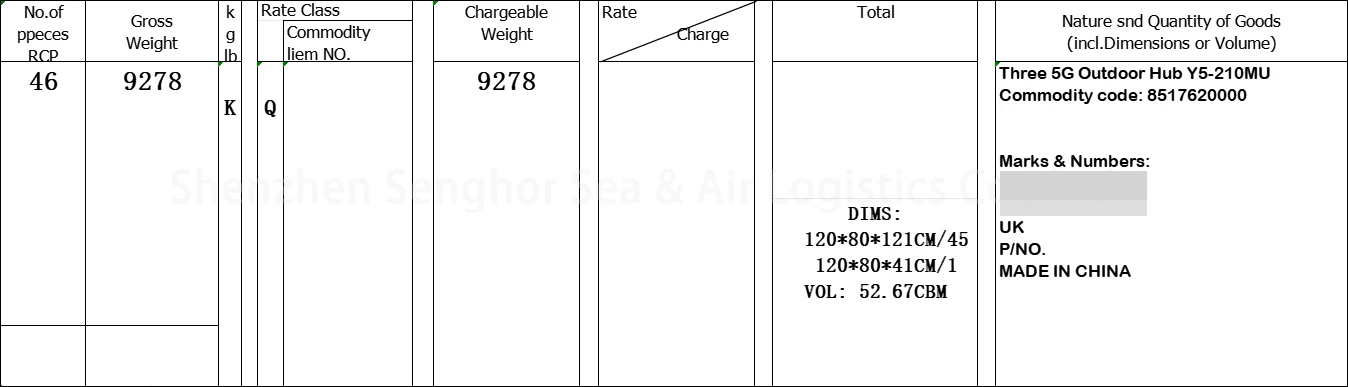
Case Study 1: A UK Client's 50 CBM Cargo Was Ultimately Arranged for Chartered Flight Space from Zhengzhou to London
We once received a transportation request from a UK client for approximately 50 CBM of cargo, requiring completion within a specified timeframe. Initially, we considered conventional air freight. However, at that time, regular flights in South China could not accommodate the entire shipment within the client's required timeframe. Insisting on the original transportation method would likely require the cargo to be shipped in batches, making it difficult to meet the client's overall schedule.
Later, we reassessed the departure airport and shipping plan, coordinating space on a chartered flight from Zhengzhou to London. The cargo was ultimately successfully taken off and delivered.
This case illustrates that when dealing with large volumes of cargo, it's not always necessary to constantly monitor airports near the supplier. Sometimes, adjusting the departure location and finding new transport capacity can be more effective in resolving problems.
Case Study 2: Spanish Customer Needs 1500 Handbags, Choosing Air Freight + Courier Delivery
A Spanish customer urgently needed to transport 1500 handbags. The customer wanted to receive the goods as soon as possible, but pure commercial courier services were expensive, as were regular air freight plus last-mile truck delivery, and regular air freight, while cheaper, didn't meet the time requirements. Choosing only these three options made it difficult for the customer to balance cost and timeliness. After understanding the customer's needs, we recommended an air freight + last-mile courier delivery approach. This meant the goods were first shipped to Europe via an air freight direct flight, and then handed over to a courier for final delivery. This approach balanced cost and timeliness.
The goods departed from China on September 20th, cleared customs and were handed over to the courier on September 22nd, and finally arrived in Spain at 12:30 PM local time on September 24th. The entire process, from departure to receipt, took only 4 days.
This shipment did not use a chartered plane, but by strategically combining air freight and last-mile delivery, the customer's urgent delivery needs were met. Therefore, urgent cargo needs do not necessarily mean chartering a plane. Sometimes, choosing a suitable transportation combination is more practical. (Read the story)
Case Study 3: Spanish University Purchase Order - Timely Adjustment of Shipping Plan After Flight Cancellation
The Spanish client has long been sourcing Chinese goods for local universities and brands. On one occasion, he had an order for a batch of notebooks, 1500 of which needed to be shipped by air, and the other 500 by sea. With the university opening date approaching, the air-freighted portion needed to be delivered as quickly as possible. At that time, there was only one week left before delivery.
Initially, we offered a DDP (Delivered Duty Paid) all-inclusive solution, but after calculation, we found that Spanish import taxes and fees accounted for a significant portion of the cost, exceeding the client's budget. After understanding the client's customs clearance conditions, we readjusted to a DAP (Delivered at Place) solution, where the client was responsible for import customs clearance and taxes, while we handled all logistics arrangements. This reduced the upfront freight costs for the client.
Further reading: Shipping from China: How to Negotiate Incoterms with Suppliers and Freight Forwarders (What Importers Need to Know)
The originally planned direct flight from Shanghai was cancelled due to a typhoon. In such situations, the most important thing is not to wait for the client to inquire whether the goods can still take off, but to promptly explain the situation and find alternative solutions as quickly as possible. That same day, we suggested adjusting the shipment to depart from Guangdong. The client cooperated exceptionally well, and the original delivery time was achieved just in time. Ultimately, the goods were delivered successfully and on time to the university in Madrid.
Although this shipment wasn't a chartered flight, it illustrates a practical issue: air freight arrangements cannot always be executed exactly as planned. Truly experienced freight forwarders do more than just book space for their clients; they need to communicate promptly when changes occur and find feasible alternatives to prevent unnecessary losses for their clients. (Read the story)
You see, different situations require different solutions.
Ask for your dedicated shipping solution: sales09@senghorlogistics.com
How does Senghor Logistics help you choose the right air freight solution?
Before offering advice, we typically need to understand several key questions: What is the cargo? What is its total weight and volume? Are there any special dimensions? When will the cargo be ready? And when does the customer need it most?
If there is sufficient space on regular flights and the delivery time can be met, we will prioritize regular air freight. If the cargo volume is large, space is insufficient, or regular flights cannot meet the project requirements, we can further evaluate charter flights and other feasible solutions. We will also consider whether the problem can be solved by changing the departure airport, splitting the shipment, or combining air freight with last-mile delivery or trucking.
Our goal is to help our clients find the solution that is truly suitable for their shipment. If you currently have an urgent shipment exported from China, or are arranging a large-volume air freight project, please contact Senghor Logistics. Provide the cargo weight, volume, dimensions, origin, destination, and estimated goods ready time, and we can first assess whether regular air freight is feasible and whether charter flights are necessary.
Frequently Asked Questions (FAQ)
Q1. What is the difference between regular air freight and charter flights?
A: Simply put, regular air freight involves booking existing cargo space on an airline, while charter flights involve arranging dedicated aircraft capacity. Regular air freight is suitable for most general cargo, while charter flights are better suited for large volumes, tight schedules, or cargo that cannot be accommodated by regular flights.
Q2. Is charter flight always faster than regular air freight?
A: Not necessarily. Charter flights offer flexible flight scheduling, but aircraft scheduling, flight permits, airport slots, and ground operations all affect overall delivery time; you can't just look at flight time.
Q3. When should I consider charter flights?
A: If the cargo volume is large, there isn't enough space available on regular flights, or the project delivery time is very tight, then charter flights can be considered.
Q4. Is charter flight always more expensive than regular air freight?
A: Generally speaking, the total cost of charter flights is higher. However, if the cargo volume is very large, splitting it into multiple shipments using regular flights may also result in higher costs and additional waiting time. It is recommended to compare the overall costs of the two options and their impact on your profits.
Q5. Can oversized cargo be shipped by regular air freight?
A: It depends on the specific dimensions and weight. In addition to the total weight, we also need to confirm the length, width, and height of each individual piece, the aircraft door dimensions, and loading/unloading conditions. We will obtain this information in advance to confirm with the airline, and will only arrange for the cargo to be stored after confirmation that it is feasible.
Q6. What information is required when requesting a quote?
A: We recommend providing the cargo name, total weight, total volume, number of pieces, individual piece dimensions, origin, destination, estimated delivery time, and latest arrival time. Any special packaging or handling requirements should also be specified in advance.
Send your inquiry: sales09@senghorlogistics.com
About the Author
Hello, I'm Vilien from Senghor Logistics, primarily responsible for assisting overseas clients with arranging logistics for exports from China.
In my daily work, I encounter a variety of shipping needs, including consolidation, sea and air freight arrangements, and door-to-door delivery solutions. For me, a freight forwarder's job is more than just providing a freight quote; it's about understanding what clients truly care about, anticipating potential problems during transportation, and helping clients find suitable solutions whenever possible.
I'm writing this article to share some experiences accumulated in my daily work, helping overseas importers reduce concerns when choosing a Chinese freight forwarder and more clearly determine whether a forwarder is suitable for their needs.
If you are sourcing goods from China or want to explore more options for your existing logistics arrangements, please contact me. Even if you don't have immediate plans to cooperate, we can discuss your transportation needs and see which solutions are worth considering.
A good partnership doesn't have to start immediately, but it's worth beginning with an honest and professional communication.