
Last October, a Spanish client left an inquiry of needing a quote for shipping from Shenzhen to Madrid DDP through our website's Spanish-language page. He left his email address and WeChat ID in the inquiry. I sent him a quote, but he didn't reply. This inquiry remained unanswered for several months.
This July, I reconnected with him via WeChat. He quickly accepted my friend request, and after a brief chat, he said something that stuck with me: "Having a contact person is good; I can ask anytime if I need anything." At that moment, I realized he wasn't without shipping needs; he just hadn't found someone he could work with long-term.
After receiving his reply, I didn't rush to ask, "Do you need to ship?" Instead, I first understood his purchasing rhythm and the types of goods he dealt with. He told me he regularly helped Spanish universities and brands source from China, handling all sorts of products-storage bags, stationery, craft accessories, promotional items, etc. The quantities were small each time, but the order frequency was high. He hadn't had a fixed freight forwarder before, constantly seeking quotes from different people, which was time-consuming and laborious. What he needed to do was focus more on purchasing and communicating with suppliers.
After several inquiries, although there were some back and forth, no deal was ultimately struck-sometimes the supplier had its own freight forwarder, and sometimes the client changed the purchasing plans at the last minute. Another salesperson might have given up long ago, but I felt the client wasn't intentionally uncooperative; it just wasn't the right time. I maintained a responsive approach, providing solutions promptly whenever he asked; and I never showed impatience when he said, "I won't ship this time."

The real turning point came at the end of July when the client sent an inquiry for notebooks-1500 urgently needed by air freight, and 500 could be shipped by sea, from China to a university in Madrid. This was the client's most critical shipment, and the requirement was clear: it had to be delivered by mid-August for the university to use at the start of the semester.
This shipment was typical heavy cargo; the 1500 books weighed over a ton, making air freight inherently more expensive. Before quoting a price, I proactively reminded the client, "This shipment mainly consists of books, so the cost will be higher based on air freight weight. I'll give you a rough estimate first." The client understood but still wanted to see the quote before making a decision.
After the first round of pricing, the client reported that it exceeded his budget. Instead of directly lowering the price to compete, I reviewed the entire solution-the all-inclusive DDP price was too high, mainly due to the significant proportion of destination customs duties and VAT. Therefore, I proposed an adjustment: changing the trade terms to DDU, where the client would handle import customs clearance and tax payment in Spain, while we would handle transportation, destination customs clearance assistance, and delivery. This significantly reduced upfront shipping costs, allowing the client more flexibility in managing expenses.
Contact our sales to get a shipping solution: sales09@senghorlogistics.com
The client also had a quote from another freight forwarder, slightly lower than ours. However, after several rounds of communication, he ultimately chose us. He said, "Another company offered a similar price, but I decided to go with you. I have confidence in you."
After the goods were loaded into the truck and transported, the original plan was to fly directly from Shanghai to Madrid, but due to typhoon weather, the flight was temporarily canceled, and the shipping time was postponed. I immediately updated the client on the flight change and provided an alternative-shipping from Guangdong. The client cooperated fully with the adjustments without any additional complaints.
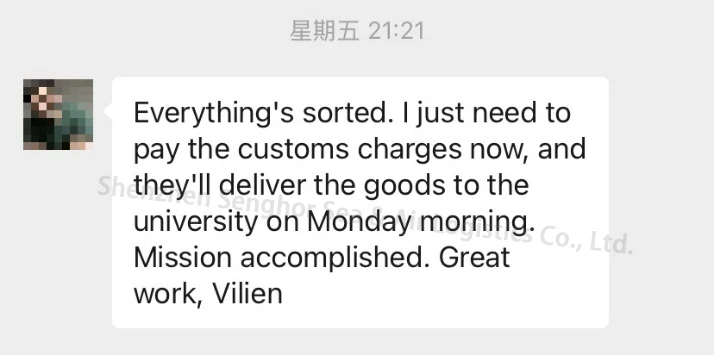
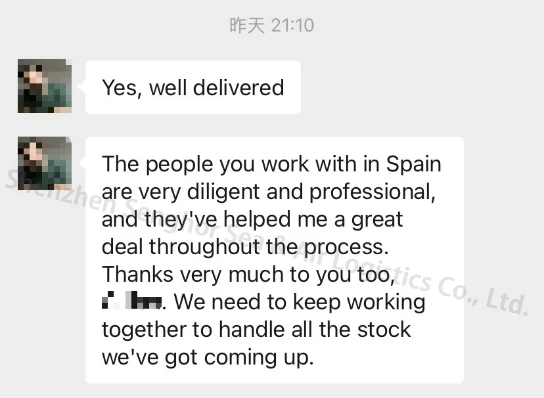
Ultimately, the goods were successfully delivered to the university in Madrid. After receiving the goods, the client sent a message: "Mission accomplished. Great work." He also specifically mentioned that our local agent in Spain was very professional and efficient, and the customs clearance and delivery were smooth throughout the process.
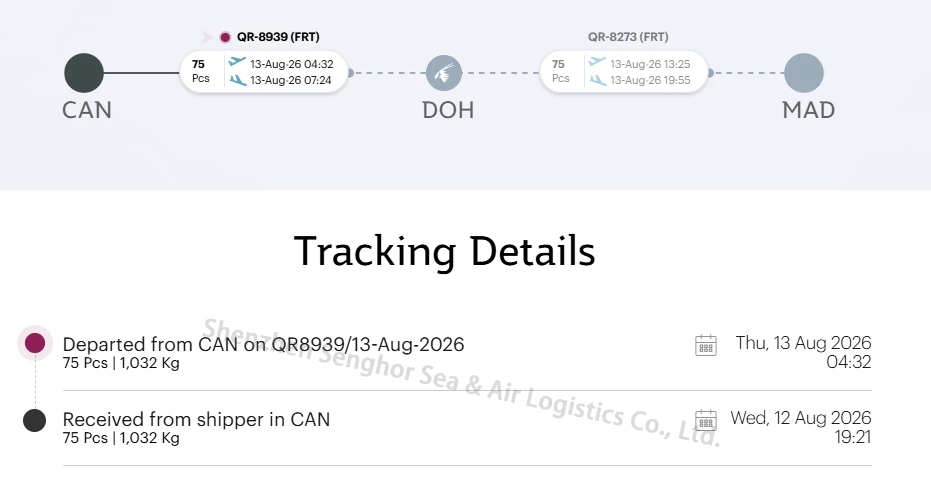
This shipment was ultimately successfully completed. Although the profit margin wasn't high, the client's feedback on the process from inquiry to completion was very positive, and he clearly indicated that he had plans to purchase more notebooks and promotional items in the future.
Reflecting on this entire follow-up process, my biggest takeaway is that the client doesn't necessarily choose the lowest price, but rather the person they are willing to cooperate with long-term. From the beginning to final delivery, the client didn't switch to other companies simply because my price was higher, nor did he give up communication because of previous unsuccessful attempts. Patience, transparency, and prompt answers to all questions make clients feel valued.
At the same time, I realized the importance of accurate pricing and meticulous attention to detail. Different shipping terms are also a key consideration for clients.
Another crucial point is that this client has expectations regarding shipping timelines and processes, especially for crucial periods like university openings. Delays can impact final delivery. Therefore, proactively providing warnings, offering alternative solutions, and keeping clients updated on progress throughout the entire communication process are key to maintaining client trust.
This client will be attending the Canton Fair in China in October and would like to meet in Shenzhen. He used the word "meet," not "visit"-I think this is how trust is gradually built.
This article is based on a real shipping service case and was written by Vilien, a salesperson at Shenzhen Senghor Sea & Air Logistics Co., Ltd.
If you have any shipping needs from China, please contact: