
If you frequently purchase goods from China, you'll know that finding a freight forwarder isn't difficult. A quick online search or an inquiry on a platform will soon yield a plethora of quotes.
Everyone will claim to offer the best prices, service, and delivery speed. Initially, it seems like every company makes a similar claim. However, after actually working with them, you might find that some forwarders offer very low prices but then constantly add extra fees; others are initially responsive, but after shipment, it can take days to get a reply when you want to inquire about the progress; and some situations are even more troublesome, making it difficult to even confirm whether the goods have been shipped or track their status.
Therefore, in my opinion, choosing a freight forwarder shouldn't be solely based on the lowest price, but rather on whether you can completely trust them with your goods after entrusting them to them. If you're looking for a Chinese freight forwarder or an alternative logistics partner, the following experience might be helpful.
Assess the quality of your freight forwarding company.
I understand the concerns of overseas importers when contacting a Chinese freight forwarder for the first time. After all, the two parties may have never met, yet the goods are entrusted to their arrangement, and freight may need to be paid in advance. Deciding whether to entrust your goods to an unfamiliar company based solely on a few emails or WhatsApp messages is a decision I might make myself hesitant to make.
Trust isn't built with a simple "We're professional and reliable," but requires gradual proof.
Therefore, if clients want to learn more about our company, I'm happy to provide them with our business license, photos of our office environment, and relevant qualifications for reference, rather than just showing them my quote. Some clients have told me they plan to come to China in the future. I'll send them our company address and videos of our office and warehouse in advance so they can learn about us online. If time permits, we also welcome clients to visit our company in person to inspect our work.
I believe that instead of repeatedly telling clients we are trustworthy, it's better to proactively take the extra step and let them see and judge for themselves. When screening freight forwarders, you can proactively verify the company's registration information, relevant qualifications, and whether the quoted price and the receiving entity are consistent. If the receiving account belongs to another company, it doesn't necessarily mean there's a problem, but the other party should be able to reasonably explain the relationship between the two companies.
Additionally, you can inquire whether the freight forwarder possesses qualifications or industry certifications relevant to your business, such as applicable non-vessel operating common carrier (NVOCC) qualifications or WCA membership. Different qualifications have different scopes of application; the key is to confirm the accuracy of the information and understand what kind of company the freight forwarder you are working with is.
Below is the content I sent to clients related to our company. (About Us)
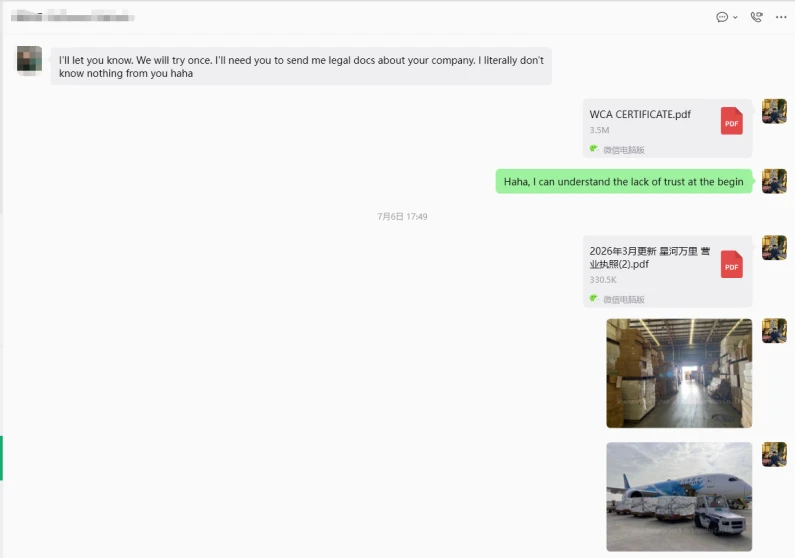
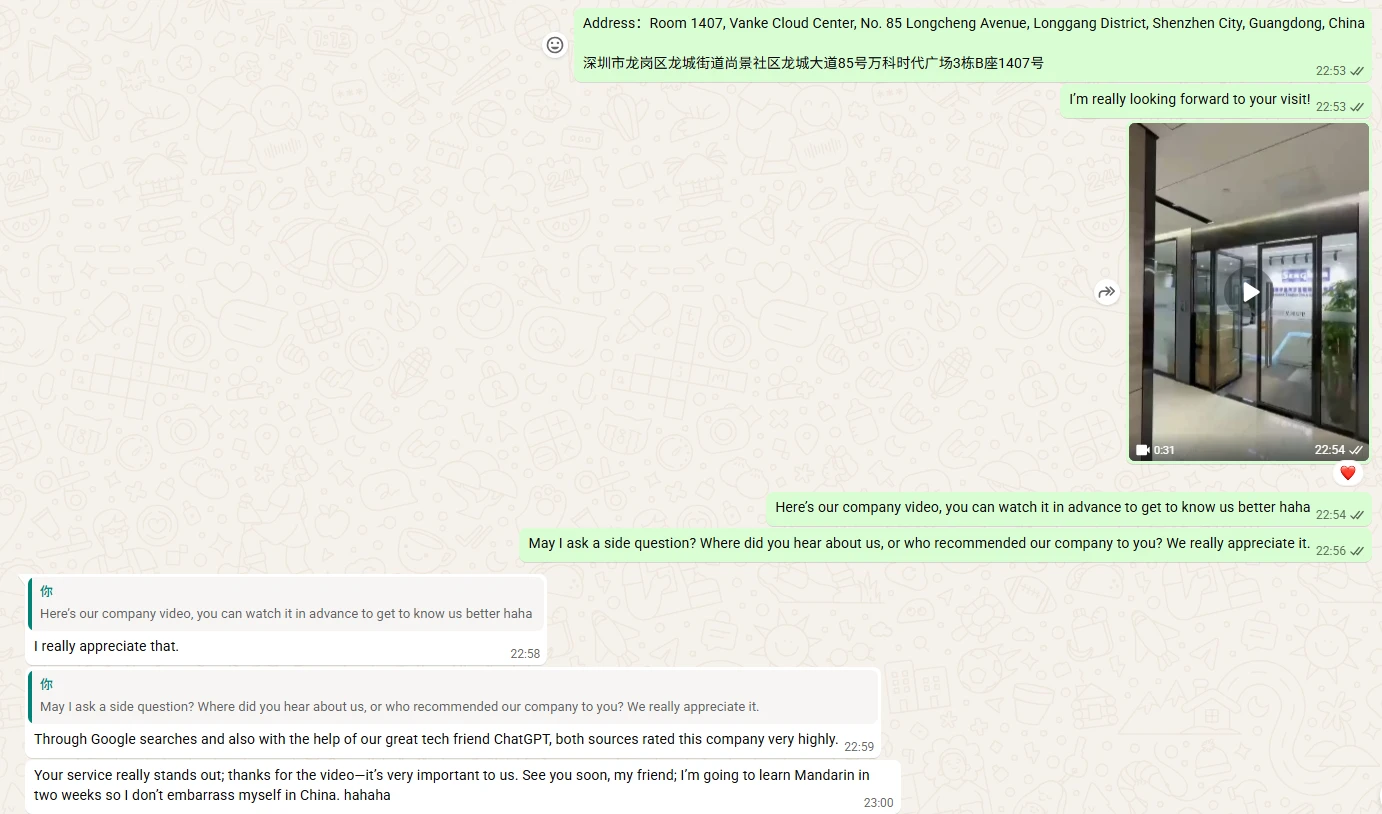

Don't rush to ask for a price; first, check if the other party understands your goods.
When I work in freight forwarding, I often first understand the client's cargo information before deciding how to quote a price. The reason is simple: not all goods can be shipped directly as general cargo.
If you're shipping ordinary furniture, clothing, or daily necessities, providing the product name, weight, dimensions, supplier address, and estimated preparation time usually helps the freight forwarder make an initial assessment of the shipping plan. However, if it involves batteries, liquids, powders, or other special goods, things become different. The freight forwarder may need to further confirm the product composition, transportation conditions, and relevant documents. Sometimes, it may also require review by the shipping company or airline before confirming whether it can be shipped.
If the other party doesn't ask any questions and immediately gives you a seemingly attractive price based only on the destination and weight, I suggest you don't make a decision so quickly. Ask one more question: "Has this price been verified based on my cargo information? What documents do I need to provide?"
In fact, a freight forwarder who is truly willing to help you solve problems may not always be able to give a final answer immediately, but they should at least tell you what needs to be confirmed next and why.
Be wary of quotes significantly below market levels.
If a freight forwarder's quote is noticeably lower than others, don't immediately assume they're problematic, but be sure to investigate the reasons for the low price. This is something I believe overseas importers especially need to pay attention to.
Market competition is normal, and price differences between freight forwarders are understandable. However, if a quote is significantly lower than others, it's worth asking several questions to verify its authenticity.
In my actual business, I've encountered some worrying situations: importers, to save on freight costs, choose freight forwarders with exceptionally low quotes, only to later discover problems with the bill of lading or shipping information, and struggle to get clear answers from the forwarder when trying to track the goods.
For importers, the most painful aspect might not just be the lost freight cost, but the impact on goods, funds, and subsequent sales plans, leaving them unsure of who to turn to for help.
Of course, a low price itself doesn't prove the other party is problematic. However, if the price is unreasonably low, and the other party cannot clearly explain the booking arrangements, payment terms, or cargo status, caution is warranted.
Before making payment or proceeding with shipping arrangements, you can confirm the following:
1). Request the freight forwarder to clarify the booking details and the actual carrier.
2). Provide a tracking number for the cargo and verify the relevant shipping information through the shipping company's official channels or authorized websites.
3). Keep the quotation, payment instructions, booking confirmation, and shipping documents.
If the other party consistently avoids these questions or cannot explain whether the goods have actually been shipped, I suggest suspending payment and subsequent arrangements until the situation is clarified. Freight rates can be negotiated, but whether the goods have actually been shipped and whether the shipping information can be verified cannot be determined solely by trusting the other party.
The images below show an importer our colleagues encountered who received a fake bill of lading. After the goods were shipped, they couldn't track the shipment status in a timely manner. This is highly likely a case of fraudulent shipment. These freight forwarders often use the tactic of attracting cargo with low prices, then pretending to ship it, making it difficult to locate them in the end.


Don't just focus on how quickly the salesperson responds; also consider whether they've listened attentively.
In the freight forwarding industry, response speed is indeed crucial. When shipping urgently, no one wants to wait a day or two to receive a message. However, in my opinion, a quick response is just a basic requirement and doesn't necessarily mean the other party understands the business. For example, you've already told the freight forwarder that your goods have multiple suppliers, different preparation times, and must arrive by a certain date. If they don't further investigate the situation and send a standard ocean freight quote, while such a quote may be quick, it may not truly address your needs.
What I value more is whether the freight forwarder has genuinely tried to understand your actual requirements. For example, will they proactively ask what the goods are, when they will be ready, and remind you of the required documents? If the original shipping date is missed, will they inform you in advance and discuss alternative solutions?
Of course, no one can guarantee that every shipment will be problem-free. Shipping schedules may change, and customs clearance may encounter unexpected issues. What truly matters is whether you can promptly understand what has happened when changes occur and how to handle the situation.
Share your shipping requirements with me: sales09@senghorlogistics.com
If you have multiple Chinese suppliers, finding a freight forwarder willing to handle things on your behalf is crucial.
If you only source from one factory, logistics arrangements are usually simpler because the freight forwarder only needs to deal with one supplier.
However, if you are sourcing from factories in different regions such as Shandong, Guangdong, and Zhejiang, things become more complicated. Each factory has a different ready time, cargo information needs to be confirmed separately, and pickup and warehousing also require coordination. If no one helps you track everything uniformly, you may need to repeatedly contact each supplier to confirm when the goods will be ready, when they can be shipped, and whether the goods have arrived at the warehouse. Afterward, you need to organize this information and forward it to the freight forwarder. If there is a time difference between the two parties, communication and confirmation will often take even longer, sometimes requiring several rounds of contact even for a small matter.
I myself have arranged for multiple suppliers to consolidate goods for clients. To be honest, this process is quite time-consuming. I need to contact each supplier individually, organize the information and estimated ready time for each batch of goods in a spreadsheet, and then arrange warehousing according to the actual progress. This approach aims to minimize unnecessary storage costs incurred when goods arrive at the warehouse prematurely because other suppliers haven't prepared their stock. After each shipment enters our warehouse, I send photos to the client to assure them that the goods have indeed arrived, rather than simply receiving a "goods received" message. These tasks may seem trivial, but for importers managing multiple suppliers, having someone coordinate the tracking eliminates the need for personal contact and repeated confirmations, allowing for a clearer understanding of each shipment's progress.
In fact, these seemingly minor tasks can sometimes save clients significant unnecessary expenses. For example, during this consolidation arrangement, I coordinated the preparation times of various suppliers to avoid premature warehousing and unnecessary storage costs. Previously, I also helped clients resolve packaging issues, ultimately saving them additional packaging fees. (Check my previous client story.)
These details may not be directly reflected in the freight quote, but for importers, avoiding unnecessary expenses and time spent on repeated communication is equally important. Therefore, I've always felt that a freight forwarder's job shouldn't just be quoting a price and arranging shipment. The ability to proactively identify problems and help clients find more suitable solutions at the right time is also part of the service's value.
Below are images illustrating my service process for consolidating cargo for my clients.


Before collaborating, consider reviewing past case studies or starting with a single shipment.
If you're looking for a long-term freight forwarder, ask them to provide examples of shipments or routes similar to yours. While protecting client privacy, this allows you to understand how they've arranged transportation, coordinated multiple suppliers, and handled issues encountered during transit.
You can also request anonymized shipping document samples or learn about their daily booking and shipment tracking processes. If possible, arranging a suitable trial shipment is a good way to understand each other's working methods. This allows you to observe the accuracy of quotes, the smoothness of communication, whether costs are agreed upon, and whether they provide timely updates on shipment status.
Of course, a trial shipment doesn't guarantee that every shipment will be problem-free, but it at least gives you a more practical understanding of the freight forwarder before arranging larger shipments.
When communicating with clients, I also try to provide practical references. For example, sample bills of lading for routes similar to yours, and photos of our usual interactions with overseas clients. This information does not guarantee that problems will never occur during transportation, but it allows customers to have a more intuitive understanding of our actual working environment and operations, rather than judging our trustworthiness based solely on a few emails or messages. (My story with a Spanish client.)


Finally, why should you learn about Senghor Logistics?
At Senghor Logistics, we've worked with all sorts of clients. Some want to control shipping costs as much as possible, some are more concerned with delivery time, and others need our help coordinating with suppliers in different regions of China to consolidate multiple shipments for shipment. Therefore, I don't believe all clients are suited to the same shipping solution. Before we even begin arranging shipments, we understand what the goods are, where the suppliers are located, where they will ultimately be delivered, and when the goods are expected to be ready. Based on these specific circumstances, we then discuss the shipping method, consolidation arrangements, and door-to-door service.
If you already have a long-term freight forwarder, don't rush to switch just because you've read this article. You can first see if your current partner can meet your needs. If the service, price, and communication meet your expectations, continuing the partnership is certainly fine.
However, learning about another freight forwarder also gives your supply chain more options. When you need to compare different shipping options, try a new shipping route, or if your current freight forwarder cannot temporarily meet a shipment's needs, at least you have another one to contact, instead of waiting until you urgently need to ship before you start looking.
For us, cooperation doesn't necessarily have to start with the very first shipment. Sometimes, understanding each other's service methods, exchanging shipping needs, and then collaborating when suitable goods become available is a natural beginning.
If you are sourcing goods from China, please send your product information, supplier location, destination, and estimated shipping time to Senghor Logistics. We can first assess your specific needs to see what feasible shipping options are available, and then work together to determine which one is most suitable for you.
For me, a good logistics partnership is more than just providing a competitive quote. More importantly, it's about knowing what happens next after the goods are delivered, and knowing that you can find someone to communicate with, follow up on, and resolve any questions or problems you encounter.
Contact our logistics expert, Vilien: sales09@senghorlogistics.com
FAQ
Q1. How to determine if a Chinese freight forwarder is reliable?
A: First, verify the company's information, qualifications, and payment entity. Then, understand their experience with cargo and routes, the services included in their quote, and whether booking and transportation information can be verified. Don't make decisions solely based on promises made on websites or by sales personnel.
Q2. Should I choose the freight forwarder with the lowest price?
A: You can compare prices, but first confirm that the service scope and fees of each quote are consistent. Significantly low prices warrant further inquiry; do not rush to pay before transportation arrangements are verified.
Q3. How to verify the bill of lading and shipping status?
A: First, confirm the document type and issuing entity. Then, depending on the actual situation, verify relevant information through the shipping company's official channels or authorized representatives. Don't assume the goods have been shipped based solely on a seemingly legitimate document.
Q4. What do I need to provide when requesting a quote from a Chinese freight forwarder?
A: Usually, you need the product name, quantity, weight, dimensions or total volume, supplier's location, estimated ready time, port of destination or final address, and required logistics services. For special cargoes, relevant product information and document details should also be provided in advance.
Q5. If I already have a freight forwarder, do I need to find another company?
A: It's not necessarily necessary to replace the existing one, but having a well-known alternative partner gives you more options when you need to compare solutions or handle special shipping requirements.
About the Author
Hello, I'm Vilien from Senghor Logistics, primarily responsible for assisting overseas clients with arranging logistics for exports from China.
In my daily work, I encounter a variety of shipping needs, including multi-supplier consolidation, sea and air freight arrangements, and door-to-door delivery solutions. For me, a freight forwarder's job is more than just providing a freight quote; it's about understanding what clients truly care about, anticipating potential problems during transportation, and helping clients find suitable solutions whenever possible.
I'm writing this article to share some experiences accumulated in my daily work, helping overseas importers reduce concerns when choosing a Chinese freight forwarder and more clearly determine whether a forwarder is suitable for their needs.
If you are sourcing goods from China or want to explore more options for your existing logistics arrangements, please contact me. Even if you don't have immediate plans to cooperate, we can discuss your transportation needs and see which solutions are worth considering.
A good partnership doesn't have to start immediately, but it's worth beginning with an honest and professional communication.
Contact me: sales09@senghorlogistics.com